When many buyers look for an injection molding manufacturer, their first reaction is to compare prices. The lower the quotation, the more attractive the supplier seems. But injection molding is not the same as buying standard parts. You cannot judge it only by unit price.
The real danger of a cheap injection molding manufacturer is not the low price itself. The danger is that the cost is hidden in places you cannot see: repeated mold modifications, batch scrap, delivery delays, quality complaints, and no after-sales responsibility. In the end, you may find that the money saved at the beginning is far from enough to cover the later problems.
Why Should Injection Molding Not Be Judged Only by Price?
Injection molding is the result of mold design, materials, equipment, process control, and management working together. Whether a plastic part can be produced consistently is not decided simply by starting an injection molding machine. Every step matters, from mold design and material selection to mold trial, machine adjustment, dimensional inspection, and mass production.
If an injection molding manufacturer quotes far below the market level, the first question buyers should ask is not “Can it be cheaper?” but “Why is it so cheap?” A low price may come from better efficiency, but it may also come from cheaper mold steel, lower machining accuracy, poor material control, fewer mold trials, skipped inspection procedures, or weak after-sales service.
Once an injection molding project goes wrong, the loss is often much greater than a few cents saved on unit price. Mold modification takes time. Scrap parts cost money. Delivery delays affect the customer’s project schedule. Unstable batch quality can damage brand reputation. For buyers, the lowest quotation does not mean the lowest cost. Stable delivery is the real cost control.
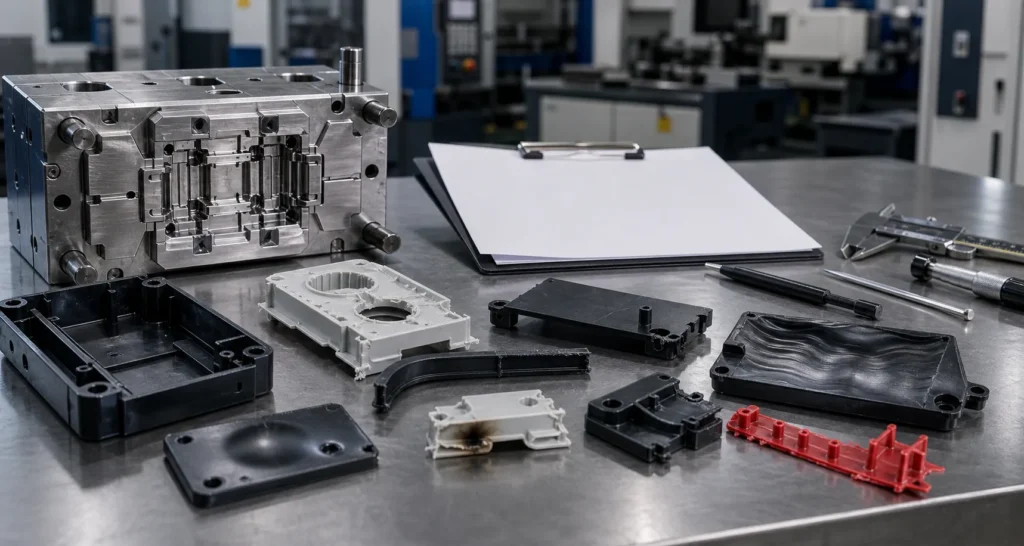
Common Hidden Costs of Cheap Injection Molding Manufacturers
The first hidden cost is repeated mold modification caused by poor mold quality. A low-cost mold may reduce cost on mold steel, insert machining, cooling channels, ejection structure, or venting design. During sampling, the parts may look barely acceptable. But once mass production starts, problems such as flash, sink marks, warpage, whitening, and demolding difficulty may appear. The more the mold is modified, the longer the project is delayed.
The second hidden cost is unstable material. Plastic materials are not defined only by their names. ABS, PP, PC, PA, POM, TPE, and TPU all have different grades and performance levels. If a low-price manufacturer uses unsuitable materials, recycled materials, or unstable material batches, the product may suffer from cracking, discoloration, dimensional drift, insufficient strength, or faster aging. What customers see is a product defect, but the real cause may be poor material control.
The third hidden cost is insufficient mold trial. A professional injection molding manufacturer uses mold trials to verify mold structure, part dimensions, appearance defects, injection parameters, and mass production stability. To reduce cost, a cheap supplier may only perform a simple mold trial, or even bring unresolved problems directly into mass production. The sample may pass, but batch production may fail.
The fourth hidden cost is missing quality inspection. Dimensional inspection, appearance inspection, assembly testing, and batch sampling all require manpower, equipment, and time. If a cheap manufacturer does not have a stable inspection process, defective parts may be shipped to the customer. By the time the customer discovers the issue, rework, replacement, complaints, and claims may already have happened.
The fifth hidden cost is delivery loss and inefficient communication. Some low-cost suppliers promise everything when taking the order, but during production they may face limited capacity, poor scheduling, and slow problem feedback. Buyers keep chasing progress, engineers keep asking for root causes, and end customers keep asking about delivery dates. Even with a low unit price, this kind of supplier creates a large management cost.
How to Judge Whether an Injection Molding Quotation Is Reasonable?
To evaluate an injection molding quotation, do not look only at the final total price. Check whether the quotation is clearly broken down. A reasonable quotation should at least explain mold cost, mold steel, mold life, product material, unit price, estimated lead time, mold trial arrangement, inspection requirements, packaging method, and after-sales responsibility.
If the quotation only shows one total price without material specifications, mold solution, trial details, or quality standards, the risk is high. It looks simple, but it is actually unclear. Once problems occur later, the supplier can easily say, “This is not included,” “That requires extra cost,” or “This should be paid by the customer.”
It is also important to see whether the manufacturer can explain the price difference. For the same plastic part, why does one supplier charge more for the mold while another charges less? Why is the unit price different? The difference may come from cavity number, steel grade, machining accuracy, material brand, surface treatment, inspection standard, and delivery requirements. A professional manufacturer can explain the price clearly. An unprofessional one will only say, “We are cheaper.”
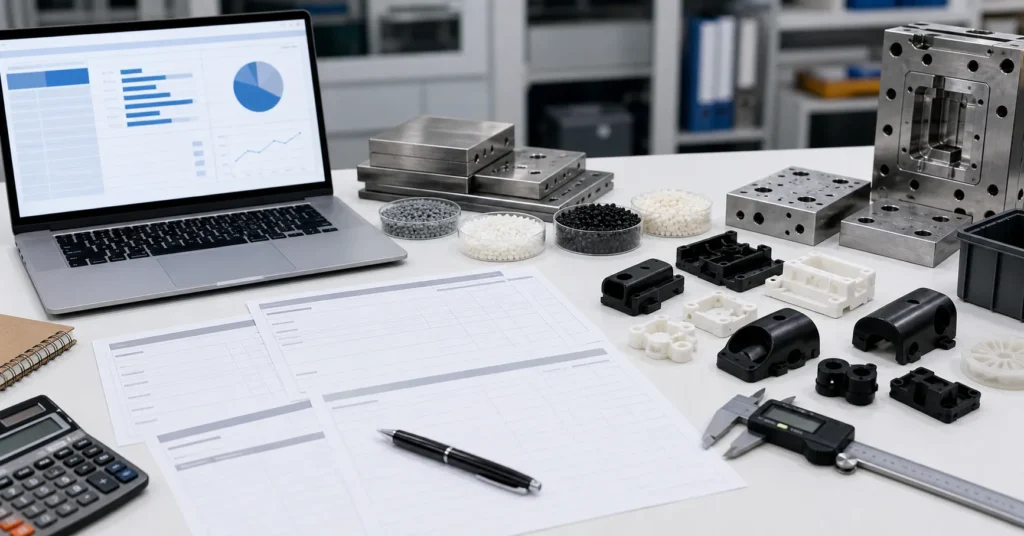
What Should You Check When Choosing an Injection Molding Manufacturer?
When choosing an injection molding manufacturer, first look at mold capability. Many injection molded part problems come from the mold. Whether the manufacturer can provide DFM analysis and identify risks such as uneven wall thickness, sink marks, demolding difficulty, and assembly interference is more important than the quotation itself.
Second, look at material experience. A manufacturer that understands materials will recommend suitable plastics based on product application, instead of simply producing whatever the customer says. Housings, structural parts, wear-resistant parts, transparent parts, and soft-touch parts all require different materials. If the material is wrong, later process adjustment is only damage control.
Third, look at mold trial and process capability. Mold trial is not a formality. It is about finding problems, solving problems, and verifying production stability. A reliable injection molding manufacturer records trial data, analyzes defect causes, and provides adjustment solutions instead of blaming the material, drawing, or customer.
Finally, look at quality control and delivery management. Does the factory have inspection equipment? Is the equipment actually being used? Are there batch inspection records? Are the products clearly labeled? Is the workshop clean and organized? Are materials managed properly? Is the lead time clear? Is feedback timely? Details are honest. Workshop management often reveals more about a manufacturer than sales promises.
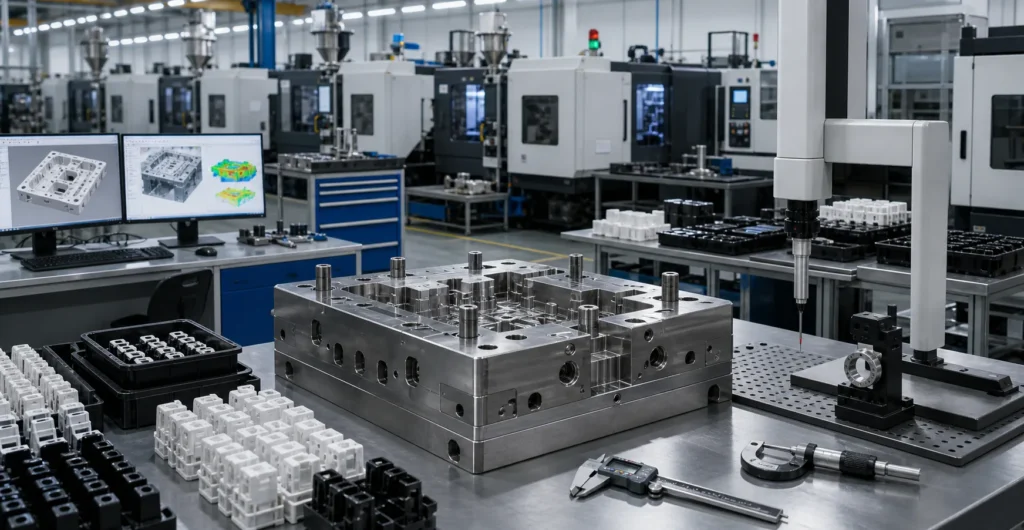
When Can You Choose a Low-Cost Option?
A low-cost option is not always wrong. The key is to know when it is suitable and where its limits are.
If the product structure is simple, dimensional and appearance requirements are not strict, the order quantity is small, and the project is only for early sample validation, a low-cost option may be used as a short-term choice. But the material, lead time, quality standard, mold trial times, and after-sales responsibility must be clearly confirmed in advance.
If the product is for long-term mass production, assembly, customer acceptance, appearance requirements, dimensional requirements, or stable delivery, then price should not be the only focus. For mass production projects, the biggest risk is not a slightly higher price, but instability. A supplier that is cheap today, delayed tomorrow, produces defects the next day, and refuses responsibility later is not truly cheap.
Procurement Tips to Avoid Problems
When purchasing injection molding services, first, do not compare only unit price. Compare the mold solution, material solution, mold trial arrangement, inspection standard, and after-sales responsibility.
Second, do not only listen to the supplier’s promises. Check whether the supplier can explain problems clearly. A truly professional manufacturer will tell you where the risks are, where optimization is needed, and what should not be skipped.
Third, always verify samples first, then confirm with a small batch, and finally move to mass production. Injection molding must respect the validation process. First samples check appearance. Small batches check stability. Mass production checks consistency. Skipping validation and going directly into mass production may save time, but it puts the whole project at risk.
Fourth, clarify delivery time, quality standards, payment terms, modification responsibility, and after-sales handling in advance. Many disputes happen not because the technical problem cannot be solved, but because responsibility was not clearly defined at the beginning. Buyers need clear boundaries, not verbal promises.
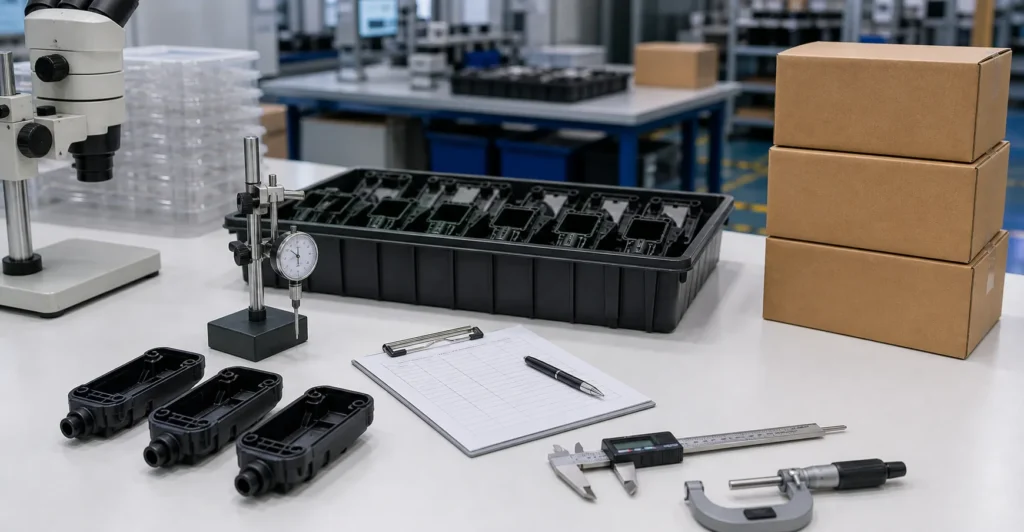
Conclusion
Why does the cheapest injection molding manufacturer often cost more in the end? The answer is simple: if the low price is achieved by sacrificing mold quality, materials, mold trials, inspection, delivery, and after-sales service, then what it saves is only a number on the quotation sheet, while what it increases is the risk of the entire project.
When purchasing from an injection molding manufacturer, do not only ask, “How much does it cost?” Ask instead: “Why is this the price? What is included? What is not included? Who is responsible if something goes wrong?” A truly reliable injection molding manufacturer may not offer the lowest price, but it can help reduce rework, lower scrap rates, and ensure stable delivery. For an injection molding project, the goal is not to be cheap. The goal is stable mass production.