When choosing an injection molding manufacturer, the biggest risk is not a high price, but a price that looks cheap at the beginning and later becomes expensive through rework, scrap, delays, and customer complaints. A truly reliable injection molding manufacturer does more than operate machines. It helps customers reduce risks throughout the entire process, from mold design and material selection to mold trials, process adjustment, and mass production delivery.
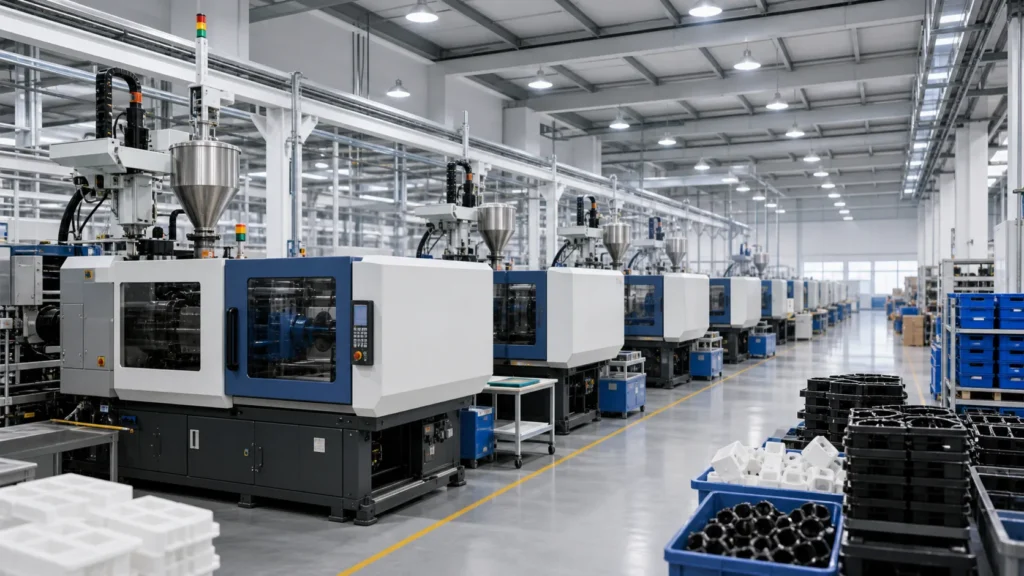
Why Is Choosing the Right Injection Molding Manufacturer Important?
Injection molded parts are not just simple plastic shells. A small dimensional deviation may cause assembly failure. The wrong material may lead to cracking, deformation, or aging. Poor mold design may result in repeated problems such as sink marks, flash, whitening, warpage, and unstable batch production.
Many buyers focus only on unit price at the beginning. As a result, the mold may be modified several times, samples may fail repeatedly, and the defect rate may remain high after mass production. On the surface, they save a little money, but in reality, they lose delivery time, brand reputation, and customer trust. If the injection molding manufacturer is chosen incorrectly, every later stage of the project can be affected.
What Capabilities Should a Reliable Injection Molding Manufacturer Have?
First, it should have mold design and manufacturing capability. The mold is the foundation of injection molding. If the mold structure is unstable, even the best injection molding machine cannot solve the problem.
Second, it should have DFM analysis capability. A professional manufacturer can identify risks such as uneven wall thickness, difficult demolding, sink marks, warpage, and assembly interference before mold making, instead of waiting until the mold is finished and then saying, “This product is difficult to produce.”
Third, it should understand materials. ABS, PP, PC, PA, POM, TPE, TPU, and other plastics have different properties and application scenarios. A manufacturer that does not understand material selection can only process according to drawings, but it may not be able to truly solve product problems.
Fourth, it should be capable of mold trial and machine adjustment. Mold trial is not a formality. It is a process to verify whether the mold, material, dimensions, and appearance can remain stable in mass production. If a manufacturer has weak mold trial capability, mass production will rarely be smooth.
Fifth, it should have quality inspection capability. Dimensional inspection, appearance inspection, assembly testing, and batch sampling are all necessary. A low-cost factory without an inspection process is essentially transferring risk to the customer.
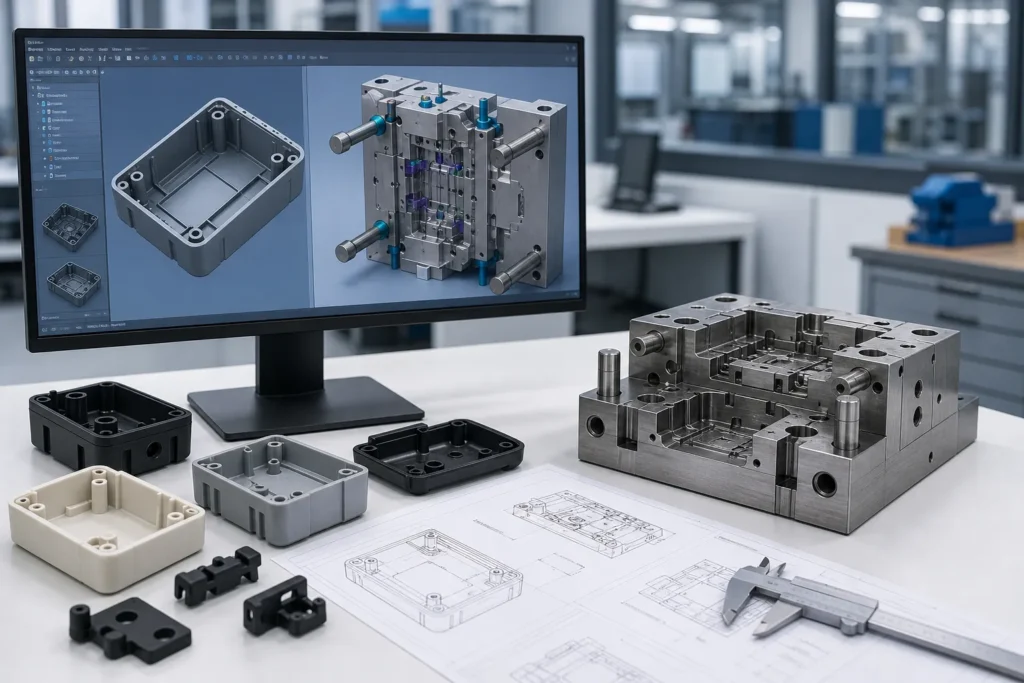
What Should You Check When Choosing a Manufacturer?
Do not judge a manufacturer only by its brochure. Check whether it has experience in similar industries, whether it has its own mold workshop, whether it can provide sampling and mold trial services, whether it has handled complex plastic parts, and whether it supports processing with different plastic materials.
You should also look at on-site management. Is the workshop organized? Are materials clearly labeled? Are samples recorded? Is inspection equipment actually being used? These details are more honest than sales promises. A manufacturer that cannot control its own process will find it difficult to ensure stable batch quality.
How Should You Evaluate an Injection Molding Quotation?
A low quotation does not always mean low cost. An injection molding quotation usually includes mold cost, material cost, processing cost, labor, loss, packaging, inspection, and management costs. The more complex the product structure, the higher the mold requirements. The more special the material, the greater the processing difficulty. The smaller the order quantity, the higher the unit price usually becomes.
If a quotation is significantly lower than the market level, be careful. The supplier may be saving costs on mold steel, machining accuracy, mold trial times, inspection processes, or after-sales service. Cheap pricing is not the problem. The problem is when the price is cheap without a clear reason. A reasonable quotation should clearly explain mold cost, material specifications, unit price, lead time, and payment terms.
What Information Should Customers Prepare Before Requesting a Quote?
To help the manufacturer provide an accurate quotation, customers should prepare complete project information. This should include 3D drawings or 2D drawings, dimensions and tolerance requirements, material requirements, color and surface treatment requirements, estimated order quantity, assembly requirements, functional requirements, project timeline, and whether inspection reports or certifications are needed.
The more complete the information, the more accurate the quotation. If you only send one picture and ask the manufacturer to provide an exact price immediately, the result is usually just an unreliable estimate.
Common Mistakes When Choosing an Injection Molding Manufacturer
The most common mistake is focusing only on price. The second mistake is looking only at the number of machines and assuming that more equipment means more professionalism. In reality, equipment is only the foundation. What truly determines the success of a project is mold experience, process capability, and quality management.
Some customers also ignore sample verification. They see that the first sample looks acceptable and rush into mass production, only to face concentrated quality problems later. Injection molding must respect the verification process. Sampling, small-batch production, and mass production are all important steps that should not be skipped.
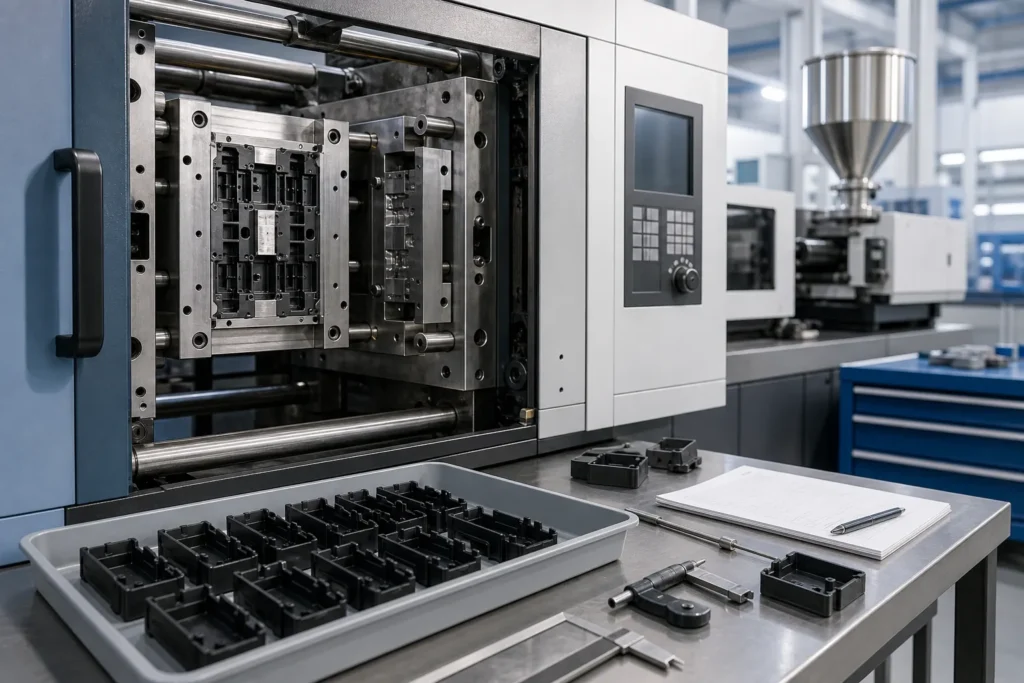
How to Know Whether a Manufacturer Is Suitable for Long-Term Cooperation?
A manufacturer suitable for long-term cooperation should actively identify problems instead of passively waiting for customer complaints. It should be able to tell you where there are design risks, where costs can be optimized, and what may affect mass production stability.
At the same time, it should deliver on time, provide clear project progress, and support product iteration and mold maintenance. Long-term cooperation depends on stability, not just an attractive one-time quotation. A truly reliable injection molding manufacturer should reduce the customer’s workload, not force the customer to constantly chase progress, check quality, and fix problems.
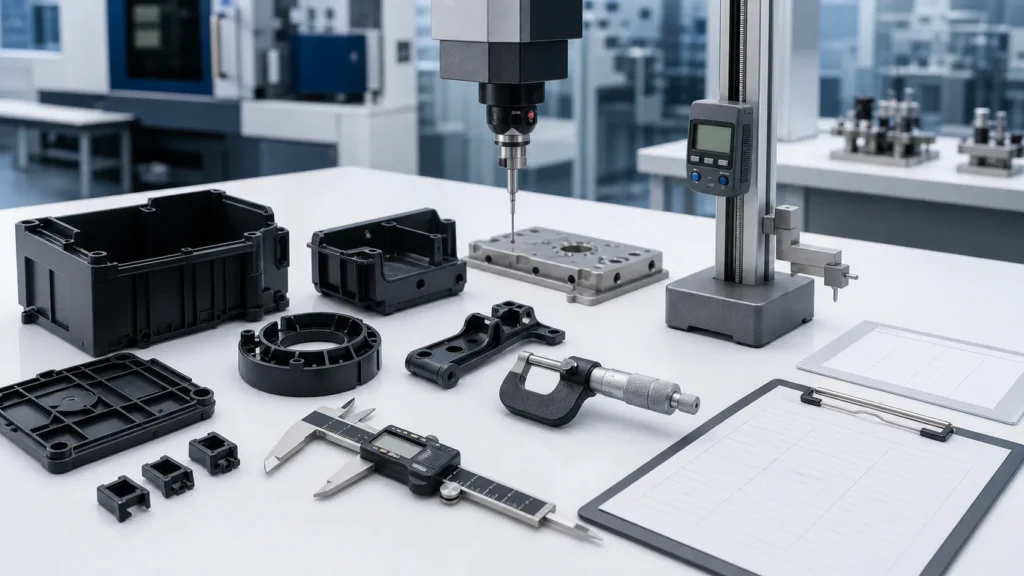
Conclusion
A reliable injection molding manufacturer is not the lowest-price supplier. It is a manufacturing partner that can make plastic parts stable, manufacturable, and less prone to problems. When choosing a manufacturer, focus on mold capability, material experience, mold trial ability, quality control, delivery capacity, and communication efficiency. If you only look at price, what you finally buy is often not savings, but trouble.