An injection mold is not just a machined piece of steel. It is the core tool that determines whether plastic parts can be produced consistently at scale. Many injection molding defects appear during production, but the real cause is often hidden much earlier in mold design, steel selection, cooling layout, ejection structure, and machining accuracy. If you want stable plastic injection molding, the injection mold manufacturing process must be done properly from the beginning.
What Is an Injection Mold?
An injection mold is a specialized tool used to form plastic products during the injection molding process. The injection molding machine injects molten plastic into the mold, while the mold determines the shape, dimensions, appearance, and structural details of the final part.
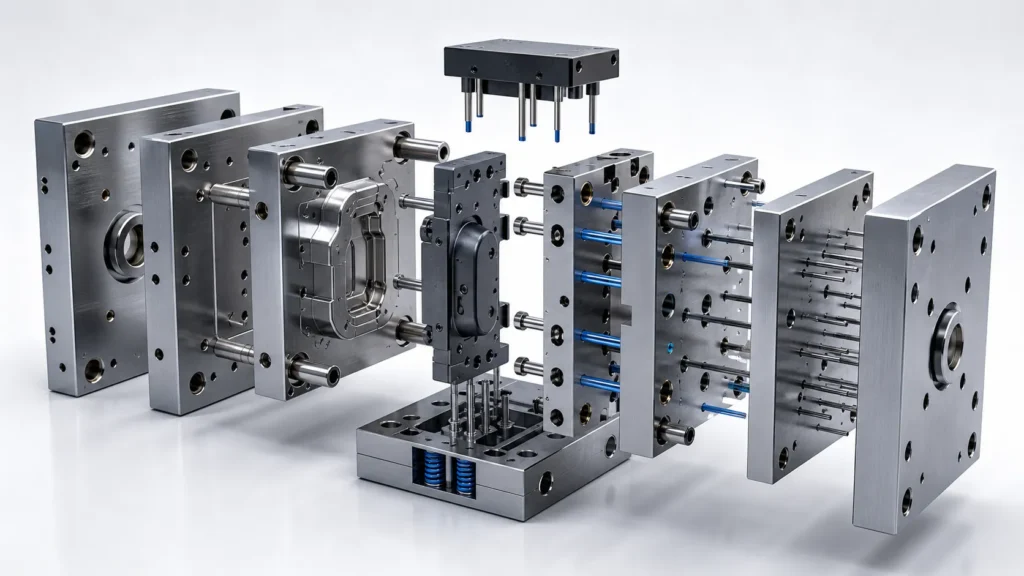
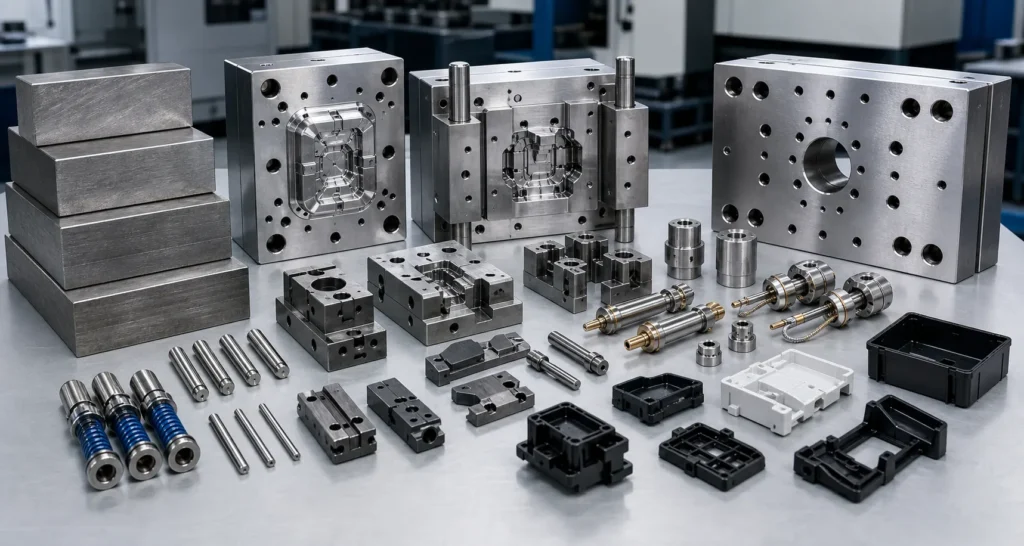
A complete injection mold usually includes the cavity, core, gate system, cooling system, ejection system, guiding system, and venting structure. The cavity and core define the product shape. The gate system affects how the molten plastic fills the mold. The cooling system influences cycle time and dimensional stability. The ejection system determines whether the part can be removed smoothly. Venting affects issues such as burn marks, flow marks, and short shots.
A poor mold may still produce samples, but it will struggle in mass production. A good injection mold must deliver stable dimensions, consistent appearance, smooth production, and lower maintenance costs.
Image to add here:injection-mold-structure.webp
Alt: Injection mold structure with cavity core cooling system and ejector system
What Should Be Prepared Before Injection Mold Manufacturing?
Injection mold manufacturing should not begin with a rushed quotation, steel cutting, or machining. The clearer the project information is at the beginning, the fewer modifications will be needed later.
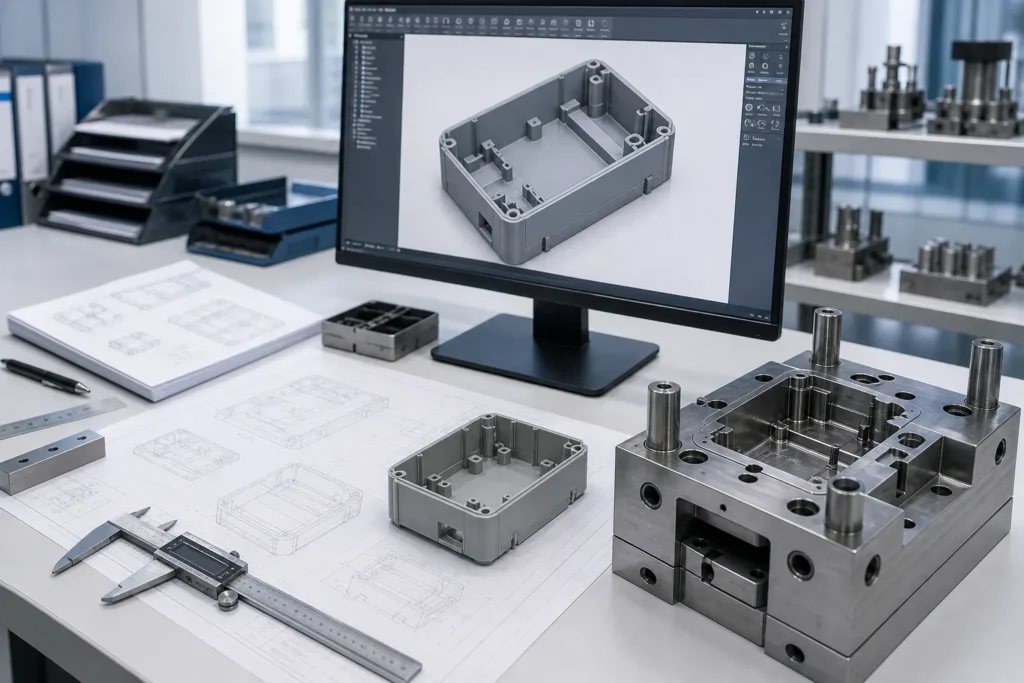
Customers should prepare 3D drawings or 2D drawings, plastic material requirements, dimensional tolerances, appearance requirements, assembly requirements, estimated production volume, surface texture, color requirements, and project timeline. If the product is for export or a special industry, certification, testing, and material compliance requirements should also be confirmed in advance.
The most dangerous situation is when a customer sends only one picture and a supplier immediately gives a “firm” price. Without drawings, material, tolerance, and quantity, the quotation is only a guess. A professional injection mold manufacturer will first review the structure, material, and production requirements before confirming the mold solution and cost.
Injection Mold Manufacturing Process
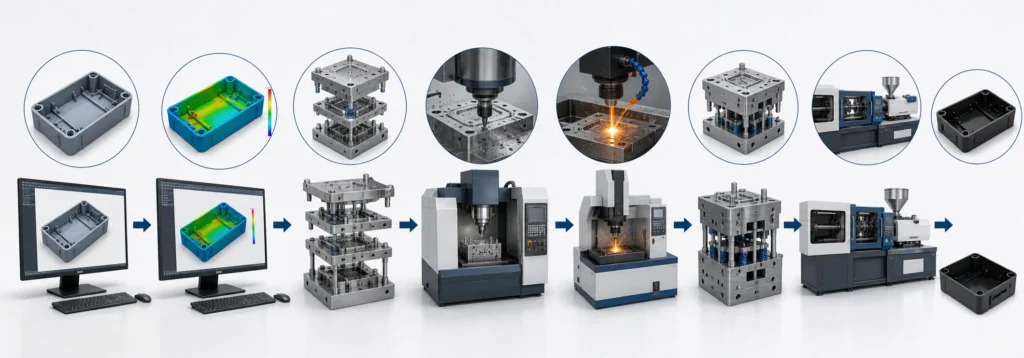
The first step is product structure analysis. The manufacturer must check wall thickness, undercuts, draft angle, ribs, sink mark risks, and possible deformation. If structural problems are not solved early, they will be paid for later through repeated mold trials and modifications.
The second step is DFM analysis. The value of DFM is simple: it identifies whether the part can be molded, ejected, and controlled in mass production. A professional supplier gives improvement suggestions before mold making, not excuses after the mold is finished.
The third step is mold design. Mold design defines the parting line, cavity number, gate location, cooling channels, ejection method, sliders, lifters, and venting. Many mold failures are not caused by poor machining, but by wrong decisions during design.
Next comes mold steel selection. Different plastic materials, production volumes, and surface requirements need different mold steels. A prototype mold and a long-life production mold should not follow the same logic. If steel is chosen only to reduce cost, wear, deformation, and flash will return later as bigger problems.
CNC rough machining and finish machining are then used to produce mold cores, mold plates, cavities, and inserts. EDM machining is used for deep cavities, sharp corners, and complex details that CNC cannot easily complete. Wire cutting is used for high-precision holes, inserts, sliders, and lifters.
After that, the mold may require heat treatment, surface treatment, polishing, and texture processing. Mirror-finish parts need high-quality polishing. Matte or textured parts require surface texture treatment. For appearance parts, dimensions are not enough; surface quality also decides whether the product is acceptable.
Finally, the mold is assembled, tested, and optimized. T0/T1 mold trial is not a formality. It verifies product dimensions, appearance, sink marks, flash, warpage, ejection, and molding stability. After trial results are reviewed, the mold is modified and then verified through small-batch production before full mass production.
Key Technical Points in Injection Mold Manufacturing
The most important part of injection mold manufacturing is not how expensive the equipment is, but whether the critical details are controlled.
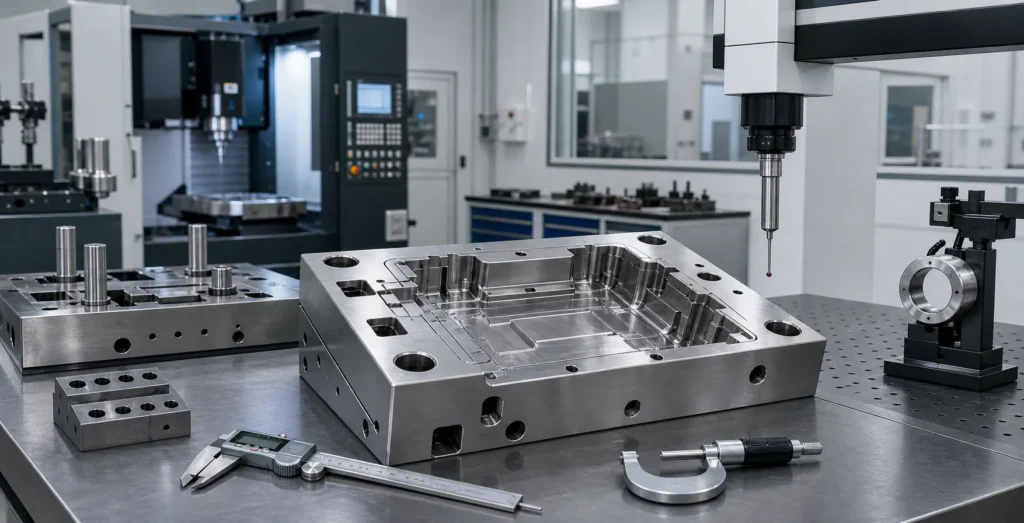
If the parting line is poorly designed, the product may have obvious flash lines. If the gate location is wrong, filling, weld lines, and appearance may suffer. If the cooling system is uneven, the cycle time becomes longer and the part may warp or shrink inconsistently. If the ejection system is poorly designed, the product may show whitening, scratches, or deformation. If venting is insufficient, burn marks, flow marks, and short shots may appear.
Tolerance control is also critical. Many plastic parts need assembly. If hole positions, snap fits, ribs, or bosses are out of tolerance, a single part may look acceptable, but the final assembly may fail. The real value of injection mold manufacturing is not only making the shape, but making the product stable, repeatable, and manufacturable.
How Long Does Injection Mold Manufacturing Take?
The mold manufacturing lead time depends on product complexity, mold size, cavity number, steel selection, surface requirements, and the number of mold modifications after trial.
Simple plastic part molds may be completed within a few weeks. Medium-complexity molds usually take longer. Precision parts, appearance parts, automotive parts, or molds with complex sliders and lifters require more time. Heat treatment, mirror polishing, texture treatment, and multiple mold trials can also extend the schedule.
A reliable manufacturer will not blindly promise an unrealistically short lead time. Mold manufacturing is not about being fast at every step. It is about moving quickly where possible and not skipping the steps that must be verified. If mold trial and optimization are skipped, the cost usually returns during mass production.
What Affects Injection Mold Manufacturing Cost?
Injection mold cost is mainly affected by product size, structural complexity, cavity number, mold steel grade, machining accuracy, surface finish, hot runner system, and required mold life.
Larger parts require more steel and machining time. More complex structures require more sliders, lifters, and inserts. More cavities increase design and machining difficulty. Higher surface requirements increase polishing and texture costs. A hot runner system may increase the initial mold cost, but in high-volume production it can reduce material waste and unit cost.
That is why mold quotations should not be judged only by the final number. A cheap mold may save cost on steel, accuracy, cooling design, trial times, or after-sales support. A low price is not always a problem. A low price without a clear reason is the real warning sign.
Conclusion
The injection mold manufacturing process determines whether plastic parts can be mass-produced consistently. Product structure analysis, DFM evaluation, mold design, steel selection, CNC machining, EDM machining, assembly, mold trial, and optimization cannot be treated casually. A professional injection mold manufacturer does more than build a mold. It solves production risks before they become mass-production problems. For customers, choosing a good mold is not spending more money. It is avoiding expensive mistakes.