Custom plastic injection molding services are not simply about melting plastic pellets and injecting them into a mold. A truly professional injection molding service is a complete manufacturing solution that covers product design, material selection, mold manufacturing, mold trial, process optimization, and mass production.
Many plastic part projects fail not because the injection molding machine is not good enough, but because the early design is unclear, the material is wrong, the mold solution is weak, or the quality control process is missing. If buyers only chase the lowest price and ignore manufacturing capability, they often save money on the quotation but lose much more during production.
What Are Custom Plastic Injection Molding Services?
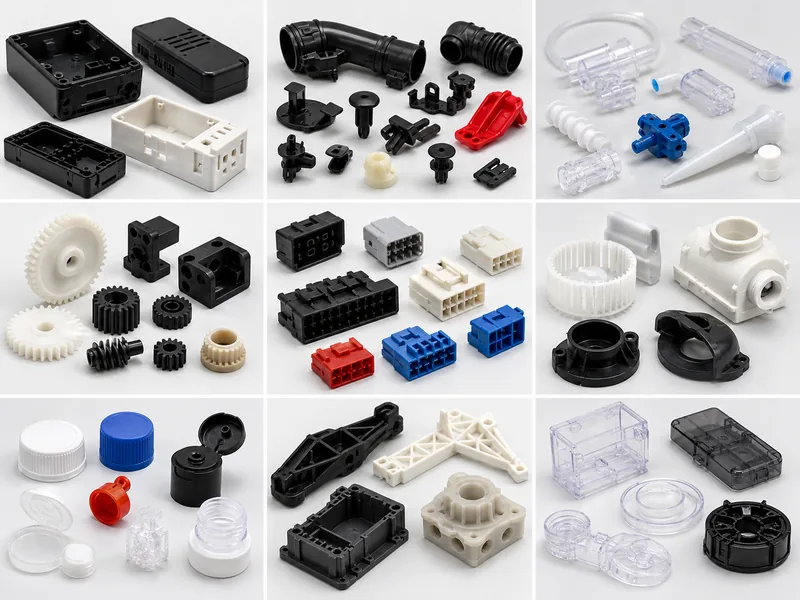
Custom plastic injection molding services refer to the process of producing plastic parts according to a customer’s drawings, structural requirements, material needs, appearance standards, and order quantity. This service is widely used for plastic enclosures, structural parts, connector housings, automotive plastic parts, medical plastic components, electronic housings, industrial components, and consumer plastic products.
Basic plastic processing only answers one question: can the part be made? Custom injection molding must answer a more important question: can the part be produced consistently at scale?
A sample that can be molded once does not mean the product is ready for mass production. A valuable injection molding manufacturer should join the project before mold making, review the product structure, and identify risks such as sink marks, warpage, demolding difficulty, uneven wall thickness, and assembly interference.
Custom Plastic Injection Molding Service Process
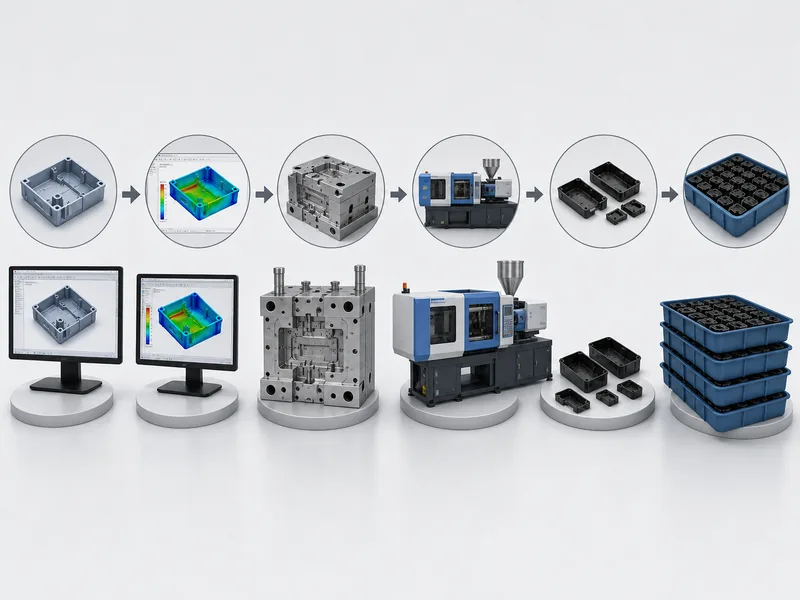
A complete custom plastic injection molding process usually starts with project communication. The customer should provide 3D drawings or 2D drawings, product application, material requirements, dimensional tolerances, color, surface finish, assembly requirements, and estimated order quantity.
The next step is DFM analysis. This step is critical because many injection molding problems are not created during mass production. They are already hidden in the product design stage. A professional manufacturer will provide optimization suggestions before mold making, instead of waiting until the mold is finished and then saying the part is difficult to produce.
After that comes material selection, injection mold design, and mold manufacturing. Once the mold is completed, T0/T1 mold trials are needed to check dimensions, appearance, sink marks, flash, warpage, demolding, and assembly performance. After the samples are approved, small-batch validation should be carried out before full mass production.
Skipping mold trial and small-batch validation is often the beginning of project failure.
What Products Are Suitable for Custom Plastic Injection Molding?
If a product requires mass production, consistent dimensions, and stable structure, injection molding is usually the better solution. Common products include electronic enclosures, automotive plastic parts, medical plastic components, industrial plastic parts, connector plastic housings, home appliance parts, custom plastic enclosures, packaging components, bottle caps, and precision plastic structural parts.
If the product is only for early-stage validation, 3D printing or CNC machining may be more flexible. But if the product design is finalized and long-term production is planned, injection molding offers clear advantages. Although mold cost is higher at the beginning, stable mass production can reduce unit cost, improve production efficiency, and maintain consistent part quality.
Core Advantages of Custom Injection Molding Services
The biggest value of custom injection molding is not simply that it can produce plastic parts. Its real value is the ability to produce consistent plastic parts in volume with controllable cost.
Injection molding can create complex structures, including snap fits, screw bosses, ribs, thin walls, internal cavities, and assembly features. It also supports a wide range of materials, including ABS, PP, PC, PA, POM, TPE, TPU, PBT, PPS, and modified engineering plastics.
Different materials can meet different requirements for strength, heat resistance, wear resistance, transparency, flame resistance, flexibility, and appearance. Custom injection molding can also support color matching, surface texture, painting, silk screen printing, plating, laser marking, and other secondary processes.
For products with appearance, assembly, or functional requirements, these capabilities are not optional. They often determine whether the product can actually enter the market.
How to Choose a Custom Plastic Injection Molding Manufacturer?
Choosing an injection molding manufacturer should never be based only on price. If a low-cost supplier lacks mold design capability, material experience, mold trial ability, and quality inspection processes, the later costs of rework, mold modification, scrap, and delays may be much higher than the money saved at the beginning.
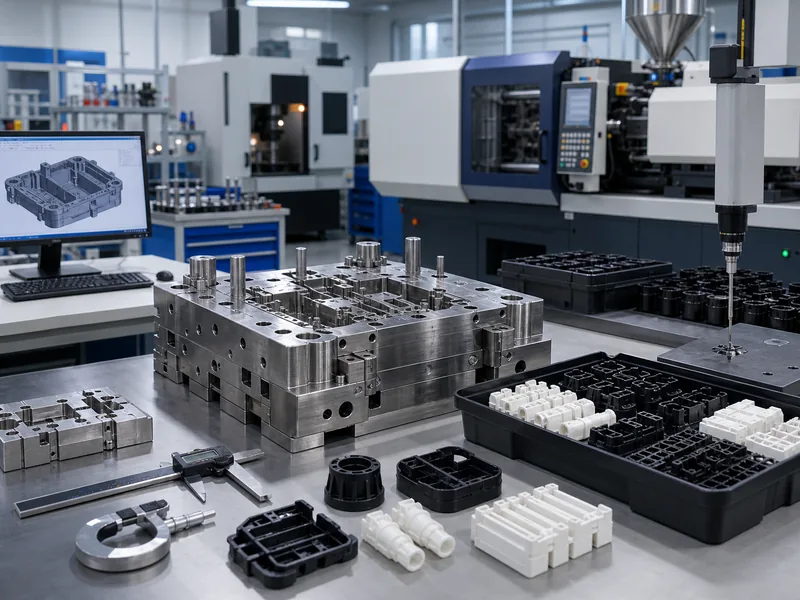
A reliable custom injection molding manufacturer should have mold design and manufacturing capability, DFM analysis experience, knowledge of multiple plastic materials, mold trial and process adjustment ability, quality control procedures, and stable mass production capacity.
Buyers should ask several important questions: Does the manufacturer have its own mold workshop? Can it provide structural optimization suggestions? Can it explain why a certain material is recommended? Does it perform first-article inspection and batch sampling? Can it support small-batch validation? Can it provide stable lead time?
These questions are much more valuable than simply hearing, “Our price is cheaper.”
What Affects the Cost of Custom Plastic Injection Molding?
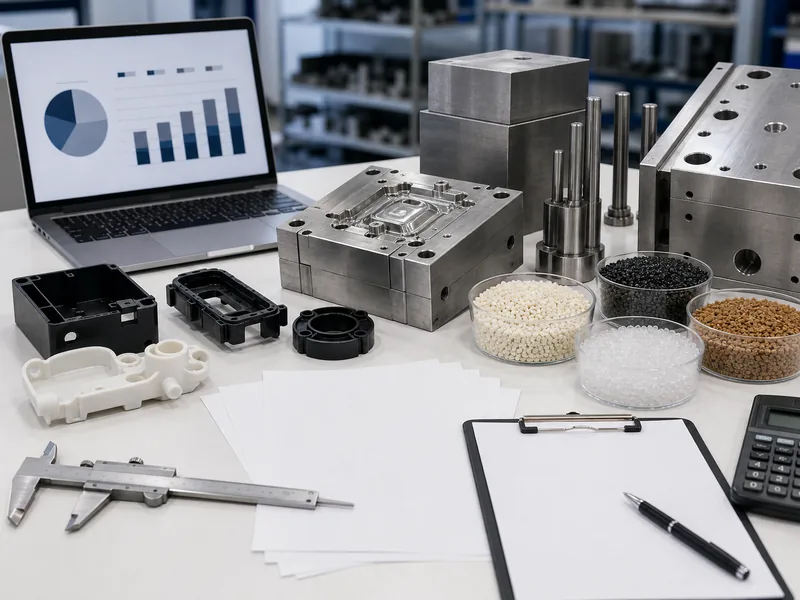
The cost of custom plastic injection molding is usually affected by product size, structural complexity, mold cost, plastic material, cavity number, tolerance requirements, surface finish, order quantity, inspection requirements, and packaging method.
Larger parts require more material and larger molds. More complex structures require more difficult mold design and machining. Tighter tolerances require better process control and more inspection. Smaller order quantities usually lead to higher unit costs.
Many customers only ask, “How much does one piece cost?” But without drawings, material, quantity, and quality requirements, any quotation is only a rough guess.
A professional injection molding manufacturer will make the quotation clear: mold cost, material type, unit price, mold trial arrangement, inspection requirements, lead time, and after-sales responsibility. A transparent quotation is the foundation of a reliable cooperation.
Conclusion
The core value of custom plastic injection molding services is not just making plastic parts. It is making plastic parts stable, manufacturable, and suitable for long-term production.
When choosing a manufacturer, buyers should not only look for the lowest price. They should look for a manufacturing partner that understands product structure, materials, molds, mold trials, quality control, and stable delivery.
For a long-term plastic part project, professional capability matters more than a cheap quotation. Stable production is the real cost advantage.